Mr. Moreland, Science Teacher
Thinking back on the experience in both San Jose and Yorkin, I was thoroughly impressed by our students. When asked, they stepped up and worked hard, both in La Carpio and in the rainforest. If I asked for a few students to volunteer, there was always a group of students who would lend a hand. The work was back breaking, especially in Yorkin; however, our students met the challenge, working hard up to our last day in the rainforest.
During our interview with the Bri Bri community, I had many questions to ask our interviewee. However, I let the students decide upon which questions to ask, instead of interrupting and asking my questions. At the end of the interview, all of the deep questions I wanted to ask were asked by the students. The students had similar questions and curiosities about the Yorkin people to me, and they were not afraid to ask them. I don't think they would have done this at the beginning of the trip.
I believe that the experiences and the lessons they have learned about life, family, and the environment will stay with these students for a very long time.
MM
Showing posts with label Teacher Reflections. Show all posts
Showing posts with label Teacher Reflections. Show all posts
Thursday, April 15, 2010

Friday, April 9, 2010
Moving Into the Heart of Costa Rica
Ryan Oliver, Social Studies Teacher
During our time in San Jose we've clearly experienced vast differences in culture, values and day to day routines of life. Students are facing challenges related to food, friendships, and schedules that would wear down even the most energetic teen. However, we remain immersed in the familiar rhythms, stimuli, and anxieties of modern urban life. With the exception of Thursday's visit to Poas and a brief walk through a dwarf forest, mostly ignored in the excitement of having more time with our Costa Rican friends, nature has been a pretty ornament along concrete streets and a flavorful fruit juice served at breakfast.
That is about to change...
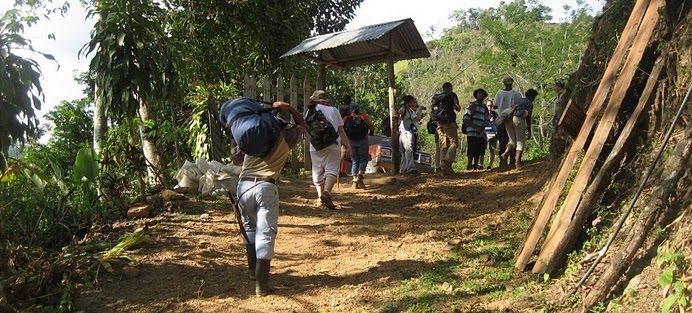
Friday morning we leave our hotel and our electronics behind to wind our way up over the mountains surrounding San Jose and the city, arriving four hours later in the coastal city of Puerto Viejo. From their we will board canoes and be transported up the river to Bribri territory in Talamanca, one of the last remaining indigenous communities in this country of 4 million that often ignores and downplays it's native roots.
This will be much more than a physical journey as it entails removing ourselves from the hectic but comfortable pace of city life with its time schedules, appointments, and rapid movements from one stimulating activity to another. In Jacob Needleman's terms, we will be leaving the world in which time is the master of men and women to enter a world of slow natural rhythms of rain, birth, decay, death, and rebirth. In listening to this world and slowing down our minds and bodies to meet it's pace, we hope all will have a better chance to experience the "conscious time," that can emerge when we move slow enough to experience both the inner and outer sounds usually drowned out under the din of city life.
Joseph Conrad and other western colonial writers were simply wrong when they described these pockets of "uncivilized" community as "darkness." They may be dark in a literal sense as a result of minimal electricity and technological advancements that fill up the nights with sound and light, and we may not agree with all their traditions and values, but they are better described in the richness of color they hold for those that look and listen closely and with more curiosity. As we travel tomorrow we will be entering the Heart of greenness and brownness, of community and independence in the face of dominating brutal forces, and the Heart of life lived in relationship with the natural world rather than at war against it.
As a logical result, there will be no internet access and no blog postings until we re-emerge Tuesday afternoon. May we continue to face challenges head on, supporting one another as the small travelling family we have become.
During our time in San Jose we've clearly experienced vast differences in culture, values and day to day routines of life. Students are facing challenges related to food, friendships, and schedules that would wear down even the most energetic teen. However, we remain immersed in the familiar rhythms, stimuli, and anxieties of modern urban life. With the exception of Thursday's visit to Poas and a brief walk through a dwarf forest, mostly ignored in the excitement of having more time with our Costa Rican friends, nature has been a pretty ornament along concrete streets and a flavorful fruit juice served at breakfast.
That is about to change...
Friday morning we leave our hotel and our electronics behind to wind our way up over the mountains surrounding San Jose and the city, arriving four hours later in the coastal city of Puerto Viejo. From their we will board canoes and be transported up the river to Bribri territory in Talamanca, one of the last remaining indigenous communities in this country of 4 million that often ignores and downplays it's native roots.
This will be much more than a physical journey as it entails removing ourselves from the hectic but comfortable pace of city life with its time schedules, appointments, and rapid movements from one stimulating activity to another. In Jacob Needleman's terms, we will be leaving the world in which time is the master of men and women to enter a world of slow natural rhythms of rain, birth, decay, death, and rebirth. In listening to this world and slowing down our minds and bodies to meet it's pace, we hope all will have a better chance to experience the "conscious time," that can emerge when we move slow enough to experience both the inner and outer sounds usually drowned out under the din of city life.
Joseph Conrad and other western colonial writers were simply wrong when they described these pockets of "uncivilized" community as "darkness." They may be dark in a literal sense as a result of minimal electricity and technological advancements that fill up the nights with sound and light, and we may not agree with all their traditions and values, but they are better described in the richness of color they hold for those that look and listen closely and with more curiosity. As we travel tomorrow we will be entering the Heart of greenness and brownness, of community and independence in the face of dominating brutal forces, and the Heart of life lived in relationship with the natural world rather than at war against it.
As a logical result, there will be no internet access and no blog postings until we re-emerge Tuesday afternoon. May we continue to face challenges head on, supporting one another as the small travelling family we have become.
Tuesday, April 6, 2010
Facing Realities
Ryan Oliver, Social Studies Teacher
As you will read from the postings below, the last 24 hours was an intense, sometimes tumultuous introduction to the people, culture and food of Costa Rica. Extremes have so far been the norm. We went from the relative wealth of a suburb of San Jose where we are staying to the abject poverty of La Carpio. We transitioned from dirt, sweat and pigs to polite conversation in an air-conditioned school building. And we went from Spaghetti to rice and beans three meals a day. We are encouraging everyone to be as fully conscious and present in each of these experiences as possible, and the students seem to be taking this to heart. As Courtney says, "I keep saying THIS is my favorite part of the trip, but I think I will probably say that about everything."
After an exceptionally long day students were asked to do some difficult mental work in preparation for our two interviews this morning with leaders of both the ruling and opposition political parties at the Legislative Assembly, Costa Rica's version of Congress. A small group of students was asked to put in extra work based on their experience with the Politics and Civics interviewing process and showed incredible stamina and leadership. They developed some of the best questions I've ever seen on one of these expeditions and modeled the depth that we are hoping for in these conversations with leaders of Costa Rican society. Others are doing their best to jump on board and facing their challenges with courage.
We are impressed by the depth of energy, intelligence and good will this group is showing so far, and look forward to continued great results as we delve deeper into the work, the interviews and the interactions with our friends at Liceo JJ Vargas. At the moment we are fully immersed in the rush of activity and new experiences. Look for more reflections and more pictures once we catch up with ourselves.
As you will read from the postings below, the last 24 hours was an intense, sometimes tumultuous introduction to the people, culture and food of Costa Rica. Extremes have so far been the norm. We went from the relative wealth of a suburb of San Jose where we are staying to the abject poverty of La Carpio. We transitioned from dirt, sweat and pigs to polite conversation in an air-conditioned school building. And we went from Spaghetti to rice and beans three meals a day. We are encouraging everyone to be as fully conscious and present in each of these experiences as possible, and the students seem to be taking this to heart. As Courtney says, "I keep saying THIS is my favorite part of the trip, but I think I will probably say that about everything."
After an exceptionally long day students were asked to do some difficult mental work in preparation for our two interviews this morning with leaders of both the ruling and opposition political parties at the Legislative Assembly, Costa Rica's version of Congress. A small group of students was asked to put in extra work based on their experience with the Politics and Civics interviewing process and showed incredible stamina and leadership. They developed some of the best questions I've ever seen on one of these expeditions and modeled the depth that we are hoping for in these conversations with leaders of Costa Rican society. Others are doing their best to jump on board and facing their challenges with courage.
We are impressed by the depth of energy, intelligence and good will this group is showing so far, and look forward to continued great results as we delve deeper into the work, the interviews and the interactions with our friends at Liceo JJ Vargas. At the moment we are fully immersed in the rush of activity and new experiences. Look for more reflections and more pictures once we catch up with ourselves.
Sunday, April 4, 2010
New
Christina Arenth, Social Studies Teacher
For many of our students, everything appeared to be new today.


Tomorrow we will put down our cameras and head to la Carpio, an immigrant community to work on an ongoing street leveling project run by a local community organization.
For many of our students, everything appeared to be new today.


Tomorrow we will put down our cameras and head to la Carpio, an immigrant community to work on an ongoing street leveling project run by a local community organization.
Subscribe to:
Posts (Atom)




 Posts
Posts

